What Is Kefir and Why Does Its Bacterial Culture Matter?
Kefir is not simply fermented milk — it is a living ecosystem in a glass, shaped by centuries of microbial tradition and modern scientific understanding.
Kefir is a fermented dairy beverage with roots tracing back thousands of years to the Caucasus Mountains, where local communities discovered that milk stored in animal-skin pouches would transform into a tangy, effervescent drink teeming with life. Today, it is recognized globally not just as a food product, but as one of the most microbiologically complex fermented foods available to consumers.
At the heart of kefir’s identity is its bacterial culture — a diverse, dynamic community of microorganisms that gives the drink its distinctive flavor, texture, and health properties. Unlike yogurt, which typically contains just one or two bacterial strains, kefir can harbor dozens of different lactic acid bacteria, acetic acid bacteria, and yeasts, all working in concert. This microbial diversity is not accidental. It is the direct result of how bacteria in kefir form, multiply, and interact throughout the fermentation process.
Understanding the bacterial culture matters for several reasons. From a nutritional standpoint, the bacteria present in kefir produce vitamins, enzymes, and short-chain fatty acids that enhance the drink’s health value. From a food safety perspective, the acidic environment created by these microorganisms naturally inhibits the growth of harmful pathogens. And from a scientific standpoint, kefir serves as a fascinating model for studying symbiotic microbial communities — how different organisms coexist, compete, and cooperate within a shared environment.
Whether you are a home fermenter, a health-conscious consumer, or simply curious about microbiology, understanding how bacteria in kefir forms unlocks a deeper appreciation for this ancient beverage and the living science behind every sip.
The Science Behind Kefir Grains: The Starting Point of Bacterial Formation
What Are Kefir Grains Made Of?
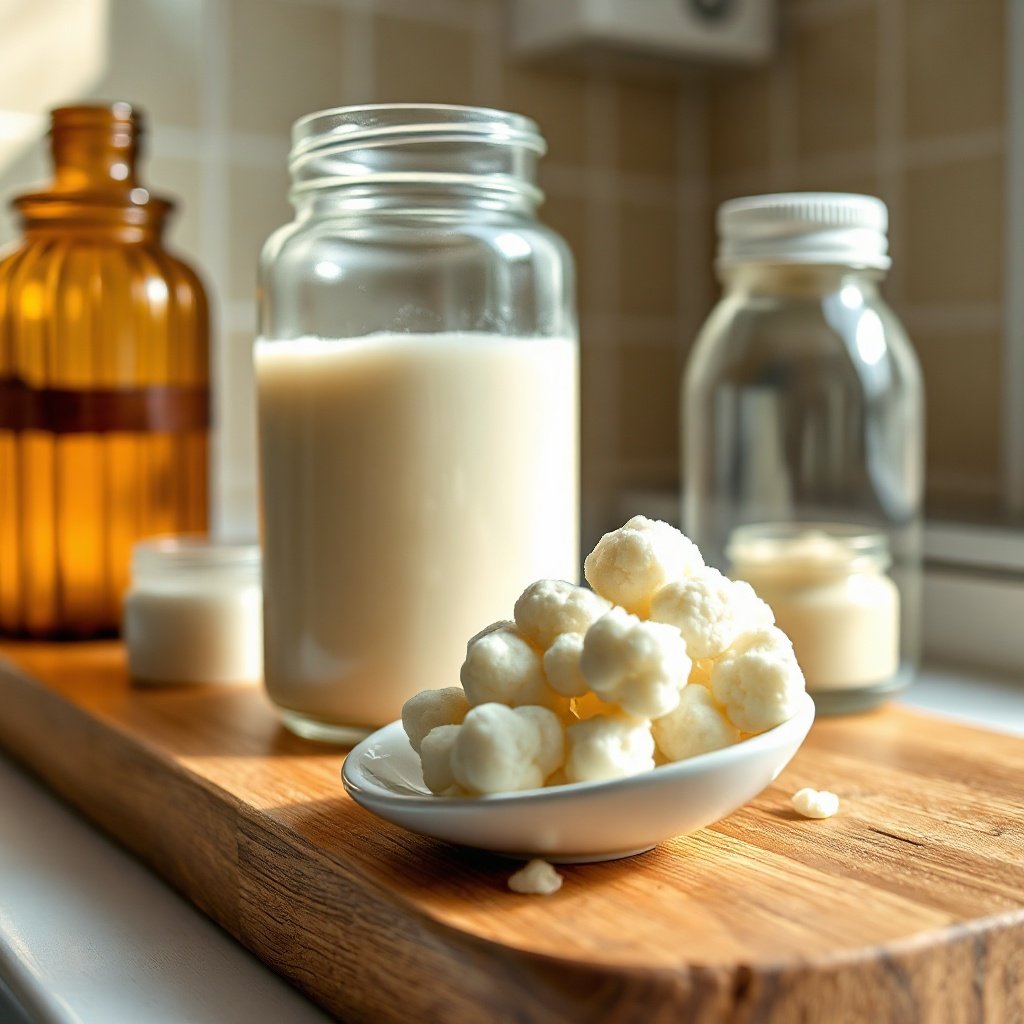
Kefir grains are the biological starter cultures responsible for initiating fermentation. Despite their name, they contain no actual grain or cereal. Instead, they are small, cauliflower-shaped clusters of microorganisms held together by a complex polysaccharide matrix known as kefiran. This gel-like substance is produced by the bacteria themselves and acts as both a structural scaffold and a protective housing for the microbial community within.
The composition of kefir grains varies depending on geographic origin and milk type, but they consistently contain a mixture of bacteria and yeast embedded in this kefiran matrix.
Component
Type
Primary Role
Lactobacillus kefiranofaciens
Lactic acid bacteria
Produces kefiran matrix; drives acidification
Lactococcus lactis
Lactic acid bacteria
Rapid acid production in early fermentation
Leuconostoc mesenteroides
Lactic acid bacteria
Contributes CO₂ and diacetyl for flavor
Saccharomyces cerevisiae
Yeast
Alcohol and CO₂ production
Kluyveromyces marxianus
Yeast
Lactose fermentation; aroma development
Acetic acid bacteria
Bacteria
Acetic acid production; grain structure support
How Kefir Grains Host and Sustain Microbial Communities
The genius of kefir grains lies in their ability to maintain a stable microbial ecosystem across thousands of fermentation cycles. The kefiran matrix does more than hold the community together — it regulates moisture retention, protects interior microbes from environmental stress, and creates microhabitats where different species thrive at different depths within the grain.
Outer layers of the grain tend to be dominated by fast-acting lactic acid bacteria that rapidly acidify the surrounding milk. Deeper within the grain, slower-growing species and yeasts find shelter from the acidic conditions they themselves help create. This spatial organization is not random — it is a self-regulating biological structure that has evolved over centuries of human use.
The grains also sustain themselves through a process of continuous growth. As the bacteria consume lactose and produce kefiran, the grains physically expand. When they reach a critical mass, portions break off, effectively propagating the culture. This self-renewal mechanism ensures that the microbial community remains viable and diverse as long as the grains are regularly fed with fresh milk.
How Does Bacteria in Kefir Form: The Fermentation Process Explained
Stage-by-Stage Breakdown of Bacterial Growth During Fermentation
Understanding how does bacteria in kefir form requires following the fermentation process from the moment kefir grains contact fresh milk. The process unfolds in distinct, overlapping biological stages, each driven by different microbial players.
Lag phase (0–2 hours): Bacteria from the grain surface begin adapting to the fresh milk environment. Metabolic activity is low, but microorganisms are preparing for rapid growth.
Early acidification (2–5 hours):Lactococcus lactis and Leuconostoc species dominate, rapidly converting lactose into lactic acid and dropping the pH of the milk.
Active fermentation (5–12 hours): Lactobacillus species accelerate acid production. Yeast populations begin generating carbon dioxide and trace amounts of ethanol, contributing to kefir’s characteristic light effervescence.
Peak microbial activity (12–18 hours): Bacterial and yeast populations reach their highest concentrations. Kefiran production intensifies, reinforcing grain structure.
Stabilization phase (18–24 hours): As pH drops below 4.5, microbial growth slows. The acidic environment naturally limits further bacterial expansion while preserving the existing community.
The Role of Temperature and Time in Bacterial Development
Temperature is arguably the single most controllable variable in kefir fermentation — small shifts of just a few degrees can dramatically alter which bacterial species dominate the final product.
Fermentation temperature directly influences microbial competition within the developing kefir. At cooler temperatures around 18–20°C (64–68°F), fermentation proceeds slowly, favoring yeast activity and producing a more complex, slightly alcoholic flavor profile. At warmer temperatures near 25°C (77°F), lactic acid bacteria become metabolically dominant, accelerating acidification and yielding a tangier, thicker product in a shorter timeframe.
Time works in tandem with temperature to determine bacterial succession — the natural process by which different species peak and decline at different points during fermentation. Extending fermentation beyond 24 hours can shift the microbial balance toward more acid-tolerant species, altering both flavor and probiotic composition significantly.
Key Bacterial Strains Found in Kefir and Their Origins
The microbial diversity within kefir is remarkable, but certain bacterial strains appear consistently across cultures, geographic regions, and milk types. These strains are not random contaminants — they are established members of a co-evolved microbial community with distinct roles, origins, and contributions to the final product.
Bacterial Strain
Classification
Geographic Prevalence
Primary Contribution
Lactobacillus kefiranofaciens
Homofermentative LAB
Caucasus, Japan, Europe
Kefiran production; grain structure
Lactobacillus kefiri
Heterofermentative LAB
Worldwide
Probiotic activity; acid tolerance
Lactococcus lactis subsp. lactis
Mesophilic LAB
Worldwide
Rapid lactic acid production
Leuconostoc mesenteroides
Heterofermentative LAB
Europe, Middle East
Flavor development; CO₂ production
Lactobacillus acidophilus
Homofermentative LAB
Commercial kefir globally
Gut colonization; probiotic effects
Acetobacter aceti
Acetic acid bacteria
Caucasus-origin grains
Acetic acid; grain cohesion support
The origins of these strains trace back to the traditional fermentation environments of the Caucasus Mountains, where naturally occurring bacteria from raw milk, animal hides, and ambient air became incorporated into early kefir grain communities. Over generations of repeated fermentation, only the most cooperative and resilient strains survived, resulting in the stable microbial consortia observed today.
Lactobacillus kefiranofaciens holds a particularly important position, as it is considered one of the founding organisms of the kefir grain matrix itself. Lactobacillus kefiri, named directly for the beverage, is uniquely adapted to the kefir environment and is rarely found in other fermented foods. The presence of Leuconostoc mesenteroides explains much of kefir’s characteristic mild effervescence and buttery aromatic notes, produced through heterofermentative metabolism that yields both lactic acid and carbon dioxide simultaneously.
The Symbiotic Relationship Between Bacteria and Yeast in Kefir
The relationship between bacteria and yeast in kefir is not one of competition but of mutual dependence — each group creates the conditions the other needs to survive and flourish.
Kefir stands apart from most fermented foods because it harbors both bacteria and yeast as permanent, functional members of its microbial community. This is not incidental coexistence. The two groups have developed an intricate biochemical partnership over centuries of co-evolution within the kefir grain environment.
The foundation of this relationship lies in metabolic exchange. Lactic acid bacteria break down lactose — the primary sugar in milk — producing lactic acid that lowers the pH of the fermenting liquid. This acidic environment, while inhospitable to many competing organisms, suits certain yeast species perfectly. Yeasts such as Kluyveromyces marxianus and Saccharomyces cerevisiae thrive in these conditions, fermenting residual sugars and producing carbon dioxide, ethanol, and a range of aromatic compounds that bacteria cannot generate on their own.
In return, yeasts contribute growth factors that directly benefit bacterial populations. Many yeast species release B vitamins, amino acids, and other metabolic byproducts that lactic acid bacteria require but cannot synthesize independently. This nutritional cross-feeding, known as syntrophy, is one of the key mechanisms that allows such a diverse microbial community to remain stable across repeated fermentation cycles.
The kefiran matrix itself plays a structural role in maintaining this symbiosis. By physically embedding both bacteria and yeast within the same grain, it ensures that the two communities remain in close proximity, facilitating the constant exchange of metabolites that sustains the partnership. Disrupting this matrix — through excessive heat, harsh cleaning agents, or prolonged starvation — can destabilize the entire community, reducing both the diversity and the functional output of the culture.
This bacterial-yeast partnership ultimately explains why kefir’s nutritional and probiotic profile is so much richer than that of single-strain fermented products. The combined metabolic output of both kingdoms working together produces a beverage that neither could create alone.
Factors That Influence How Bacteria Forms and Thrives in Kefir
Milk Type and Its Effect on Bacterial Composition
The substrate on which kefir grains ferment has a profound influence on which bacterial strains dominate and how robustly they develop. Whole cow’s milk, with its high lactose content and rich fat profile, supports the broadest range of microbial activity and consistently produces the most diverse bacterial communities. Goat’s milk, which contains smaller fat globules and slightly different protein structures, tends to favor certain Lactobacillus strains while yielding a thinner, more mildly flavored kefir. Plant-based alternatives such as coconut milk or oat milk present a fundamentally different nutritional landscape — lower in lactose or free of it entirely — which can significantly reduce bacterial diversity and slow grain growth over time without periodic reintroduction to dairy.
Environmental Conditions That Shape Microbial Growth
Beyond milk type, the surrounding environment exerts continuous influence over how bacteria in kefir forms and which species ultimately thrive. Several key variables interact to shape the microbial outcome of every fermentation batch:
Grain-to-milk ratio: A higher proportion of grains speeds up fermentation, compressing the timeline during which different bacterial stages develop.
Fermentation vessel material: Glass and ceramic retain temperature more consistently than plastic, reducing microbial stress from fluctuating conditions.
Exposure to light: Prolonged ultraviolet light exposure can damage sensitive bacterial strains, particularly Leuconostoc species, reducing flavor complexity.
Water quality in rinsing: Chlorinated tap water used to rinse grains can suppress bacterial populations, particularly yeast-associated bacteria that are more sensitive to chemical disinfectants.
Fermentation duration: Extending fermentation beyond 24 hours shifts the community toward more acid-tolerant species, altering the probiotic composition of the finished kefir.
Health Implications of Kefir’s Bacterial Formation
The way bacteria forms in kefir is not merely a matter of food science — it has direct consequences for human health. The specific strains produced through fermentation, the metabolic byproducts they generate, and the sheer microbial diversity of the finished product all contribute to a range of well-documented physiological benefits.
Perhaps the most significant health contribution comes from kefir’s role as a probiotic food. The lactic acid bacteria formed during fermentation — particularly Lactobacillus kefiri and Lactobacillus acidophilus — are acid-tolerant enough to survive the harsh conditions of the human digestive tract and reach the colon in viable numbers. Once there, they contribute to a balanced gut microbiome, which research increasingly links to immune function, mental health, and metabolic regulation.
The fermentation process also produces bioactive compounds that extend beyond living bacteria. Kefiran, the polysaccharide matrix produced by Lactobacillus kefiranofaciens, has demonstrated anti-inflammatory and antimicrobial properties in laboratory studies. Short-chain fatty acids generated during bacterial metabolism help nourish the intestinal lining, supporting the integrity of the gut barrier and reducing permeability associated with chronic inflammation.
Kefir’s bacterial formation also results in partial lactose breakdown. As lactic acid bacteria consume lactose during fermentation, they reduce its concentration in the final product. This makes kefir significantly more tolerable for individuals with lactose sensitivity compared to fresh milk, broadening its accessibility as a nutrient-dense food.
Additionally, the acidic environment created by bacterial activity during fermentation enhances the bioavailability of minerals such as calcium, magnesium, and phosphorus. The lowered pH increases mineral solubility, meaning the body can absorb these nutrients more efficiently from kefir than from unfermented dairy. Taken together, the bacterial formation process transforms raw milk into a nutritionally superior food with measurable health advantages.
Conclusion
Understanding how bacteria in kefir forms reveals that this ancient beverage is far more than a simple dairy product. From the moment kefir grains contact fresh milk, a precisely orchestrated sequence of microbial activity unfolds — shaped by grain composition, temperature, time, milk type, and the remarkable symbiosis between bacteria and yeast. Each stage of fermentation contributes distinct strains, metabolites, and structural changes that collectively define kefir’s flavor, texture, and health properties.
The bacterial community within kefir is not static or accidental. It is the product of centuries of co-evolution, refined through countless fermentation cycles into one of the most complex and stable microbial ecosystems found in any food. For consumers, this means that every glass of properly fermented kefir delivers a diverse, living culture with genuine nutritional value. For those who ferment at home, understanding these biological processes empowers better decisions about temperature, timing, and grain care — ensuring a consistently rich and probiotic-dense result.
Frequently Asked Questions
How long does it take for bacteria to fully develop in kefir?
Bacterial development in kefir follows a staged timeline that typically spans 18 to 24 hours at room temperature around 20–25°C (68–77°F). The most active phase of bacterial growth occurs between 5 and 18 hours, when lactic acid bacteria and yeast populations peak. Fermentation beyond 24 hours continues to shift the microbial balance but can produce an overly sour product as acid-tolerant strains increasingly dominate.
Can bacteria in kefir survive digestion and reach the gut?
Yes — many of the bacterial strains formed during kefir fermentation are specifically adapted to survive acidic environments, which is why they thrive in the low-pH conditions of fermented kefir in the first place. Strains such as Lactobacillus kefiri and Lactobacillus acidophilus demonstrate measurable acid and bile tolerance, allowing viable cells to transit through the stomach and reach the large intestine where probiotic activity occurs.
Does homemade kefir contain more bacteria than store-bought kefir?
Homemade kefir fermented with live grains typically contains a significantly broader diversity of bacterial strains than most commercial products. Store-bought kefir is often made with defined starter cultures containing a limited number of selected strains, and pasteurization of the final product can reduce viable bacterial counts. Home fermentation using active grains preserves the full complexity of the natural microbial community.
What kills the bacteria in kefir?
Several factors can damage or destroy kefir’s bacterial community. Temperatures above 40°C (104°F) begin to kill heat-sensitive strains, while temperatures above 60°C eliminate most viable bacteria entirely. Chlorinated water used during grain rinsing suppresses bacterial populations, as do metal utensils that can react with the acidic environment. Prolonged starvation — leaving grains without fresh milk for extended periods — also causes significant microbial die-off and reduces strain diversity.
Learn how to make cauliflower kimchi, a tasty homemade probiotic. It’s full of flavors and good for your health. It uses hijiki seaweed, apples, and pears for a fresh twist. This kimchi is not just tasty. It’s also good for your gut and immune system….
Fermenting onions makes them easier to digest and more nutritious than raw ones. It uses a brine solution of water and salt for 4 to 7 days. This makes them tangy and full of good bacteria. These fermented onions can stay fresh in the fridge…
Learn how to make fermented dill pickles. They taste great and help your immune system. This recipe uses natural fermentation, a healthier way than modern methods. Adding these pickles to your meals can make your immune system stronger. It also helps your gut health. Let’s…
Coconut kefir is a fermented drink known for its health perks, mainly for the gut. It’s packed with good bacteria and yeast. Probiotic rich coconut kefir boosts digestion and gut health. It’s a great choice for those who can’t have regular kefir because it’s dairy-free….
Learn how easy it is to make sauerkraut at home. It’s a fermentation classic that adds a sour flavor and probiotics to any meal. This simple recipe will show you how to make it with just cabbage and salt. If you’ve ever wondered, how do…
Fermented chili peppers are becoming more popular. They’re not just for their spicy taste. They might also help your gut health. These spicy foods go through a natural process. This process could make your gut microbiome better. It might also help with digestion. This section…